
I HELP CREATIVE TEAMS TURN COMPLEXITY INTO CLEAR PATHS FORWARD.
Across animation, games, and publishing, I’ve built systems that clarify ownership, connect teams, and make complex work easier to run.
Production Operations · Program Management · Creative Production
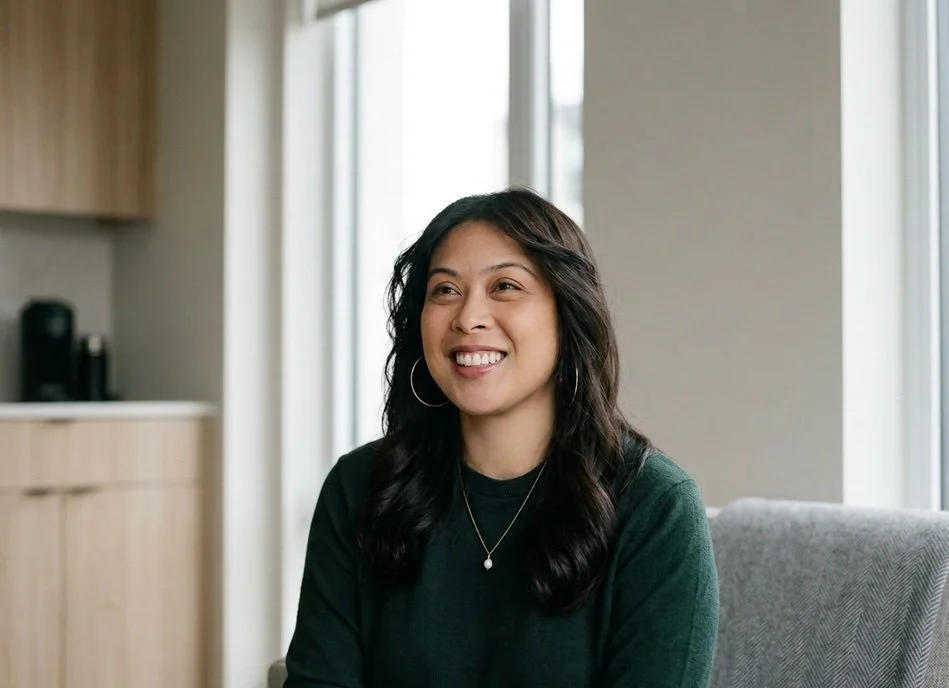
HOW I WORK
I’m usually drawn to the same kinds of problems: unclear ownership, information living in too many places, teams working differently, or creative goals changing faster than the systems around them.
My approach is pretty simple: understand how the work actually happens, find what’s getting in the way, and build enough structure to make things clearer - without adding process just for the sake of process.
A few problems I've helped solve.
Across animation, games, and publishing, I've worked on a pretty wide range of problems - but the pattern is usually the same: understand how the work actually happens, find what's getting in the way, and build something that makes it easier to run.
Here are a few examples.
01 / RIOT GAMES
BUILDING SHARED OPERATIONAL INFRASTRUCTURE ACROSS PRODUCT TEAMS
What started as a three-month documentation assignment turned into 18 months of working across multiple game teams - learning how they worked, figuring out what they actually needed, and building different solutions along the way.
ROLE
Project Manager, Publishing Operations II - Documentation
TIMELINE
September 2024 – March 2026
PRODUCTS
Teamfight Tactics · League of Legends · VALORANT · Riftbound
FOCUS
Publishing Operations · Program Management · Knowledge Systems · Workflow Design
-
Publishing teams had strong ways of working, but knowledge, resources, and production processes often lived across different people, tools, and product teams.
The challenge wasn't building one system for everyone. It was figuring out where shared foundations could help - and where teams needed something built around the way they actually operated.
-
I started by organizing and documenting production knowledge, but the work quickly grew beyond documentation.
I partnered with producers and craft leads to understand how teams actually worked, identify recurring gaps, and separate shared needs from product-specific ones. From there, I helped shape solutions ranging from centralized knowledge systems and production playbooks to team-specific workflows and automation.
-
TFT was the first product team I partnered with closely. Through interviews and hands-on collaboration, I helped turn scattered production knowledge into a centralized 50+ page hub covering onboarding, team resources, production playbooks, and deeper campaign and tactic workflows.
That work became a foundation for how I approached other Publishing teams: understand the way people actually work first, then determine what should be documented, standardized, or supported through better tooling.
Across Publishing, the solutions varied by team. Some needed clearer knowledge systems and runbooks; others needed workflow improvements and automation. For Riftbound, that included helping prototype and roll out a Slack and Airtable workflow designed around the team's production needs.
-
What began as a three-month documentation assignment expanded into 18 months of Publishing Operations work across four Riot products: Teamfight Tactics, League of Legends, VALORANT, and Riftbound.
The work created clearer operational foundations while preserving flexibility for individual teams - from a 50+ page centralized TFT knowledge hub to production playbooks, team-specific workflows, and automation that moved from prototype through rollout.
-
The biggest thing I took forward was to understand how people actually work before designing the system around them.
The best operational solution isn't always one standardized process. Sometimes it's a shared foundation. Sometimes it's a team-specific workflow. The job is figuring out which one the team actually needs.
02 / NETFLIX ANIMATION
FROM RUNNING PREVIS TO DEFINING HOW IT WORKS
My experience with Previs at Netflix has stretched across multiple productions and different stages of my career - from Production Coordinator learning how the department worked to Production Supervisor responsible for figuring out how it should work for the needs of each show.
Every production was different. Creative leadership changed, team structures changed, and the role Previs needed to play changed with them. Over time, my job became less about running an existing process and more about asking: What does this production actually need from Previs, and how do we build the department around that?
ROLE
Production Coordinator → Production Supervisor
TIMELINE
2019–2024 · 2026–Present
DEPARTMENTS
Art · Previs
FOCUS
Creative Production · Department Leadership · Production Strategy · Cross-Functional Planning
-
Previs sits in a part of feature animation where creative ideas are still evolving while production already needs to make decisions about schedules, resources, reviews, dependencies, and downstream handoffs.
There wasn't one Previs model I could simply carry from show to show. Different productions had different creative needs, team structures, workflows, and relationships between Art, Editorial, Previs, and downstream teams.
The challenge became figuring out what needed to stay consistent, what needed to change, and how to give each team enough structure to move forward without building process just for the sake of having one.
-
I started at Netflix supporting Art and Previs production and gradually took on broader ownership of schedules, reviews, workflows, reporting, and cross-functional planning before moving into Production Supervisor.
As a Supervisor, my focus shifted from keeping the department moving to helping figure out how it should operate for each production. I partnered with artists, creative leadership, Editorial, Art, production teams, and global partners to turn changing creative needs into practical production plans.
That meant surfacing risks and dependencies, clarifying handoffs and reviews, building different scheduling scenarios, and helping leadership understand the tradeoffs between creative scope, team capacity, schedule, overtime, and budget.
-
Because each production needed something different from Previs, I continuously adapted how the department was planned and run rather than relying on one fixed pipeline.
I built scheduling and planning models for different production scenarios, clarified workflows and cross-functional handoffs, and developed resources that made Previs easier for both production and partner departments to understand.
Over time, I began capturing the foundational knowledge that remained useful across productions - what Previs needs, how work moves through the department, where key dependencies and handoffs happen, and what production teams need to consider when planning the work.
That became a Previs Handbook and supporting operational resources designed to make that knowledge easier to transfer rather than leaving it with the people who happened to already know the department.
-
The work eventually became bigger than how I ran Previs on any one production.
The Previs Handbook became part of how I trained another Production Supervisor who was new to the department and later helped support the onboarding of her coordinator. It has also served as a reference for other production team members interested in understanding Previs, alongside schedule models I developed for different production scenarios.
What began as years of adapting Previs to individual productions ultimately became a reusable foundation for transferring production knowledge to other people - helping someone new understand not only what the department does, but what they need to think about when running it.
-
The goal of building a good production system isn't to make every team work the same way.
It's knowing which foundations matter, understanding where the work needs to adapt, and creating enough clarity that the people coming after you don't have to start from zero.
03 / DREAMWORKS ANIMATION
BUILDING A GLOBAL IMF PRODUCTION WORKFLOW
When DreamWorks moved away from a proprietary production tracking system and into ShotGrid, IMF needed more than a new place to track tasks. We needed to translate an established global workflow into a new system without losing what already worked - while creating better connections between departments along the way.
ROLE
Production Coordinator, IMF
FOCUS
Production Operations · Workflow Design · Systems Migration · Change Management
-
IMF supported multiple productions at once, all at different stages and with different schedules, needs, and production nuances.
As the studio transitioned into ShotGrid, the challenge wasn't simply recreating the old tracking system. It was figuring out what needed to stay consistent across IMF, what needed to flex by show, and how the new system could better connect our work to the departments around us.
One of those gaps was the handoff from Lighting into IMF. There wasn't yet a fully established ShotGrid process for reliably surfacing when upstream work was ready for us to begin.
-
I partnered closely with the IMF Department Head and Department TD to understand the department's established workflow and translate it into a scalable ShotGrid framework.
My role sat between production needs and system design: mapping how the department actually worked, identifying what needed to carry over from the previous system, and building a structure that could work consistently across productions without forcing every show into exactly the same process.
-
I built global and show-level ShotGrid dashboards that gave IMF Production visibility across multiple projects while still allowing us to manage the needs of each individual show.
Working with the Department Head, we also established a clearer Lighting to IMF handoff. Designated Lighting status updates could surface ready work directly within IMF's tracking and task ecosystem, while a lightweight human heads-up kept communication between teams intact.
For artists, we intentionally kept tasks, notes, statuses, and inbox workflows familiar so the transition didn't require relearning how to work just because the underlying system had changed.
I also created an IMF Production Manual documenting the broader operating model - roles and responsibilities, cross-department handoffs, review cadences, tracking conventions, inventory management, artist assignments, dailies workflows, and production best practices.
To support adoption, we created documentation, training, and recorded walkthroughs, then continued troubleshooting and refining the workflow as teams used it in production.
-
What started as a systems migration became a more connected and repeatable operating model for IMF.
The new framework gave the department consistent global and show-level visibility, established a clearer Lighting to IMF handoff, and brought incoming work more directly into the task and status workflows artists were already using.
Just as importantly, the transition preserved familiar ways of working while creating documentation and training that made the process easier to adopt and maintain across productions.
The framework continued to be used after I left DreamWorks, evolving with the department over time.
-
A new tool doesn't automatically create a better process.
This project reinforced something I've carried into my work since: start by understanding how people actually work, preserve what's already effective, and use the system change as an opportunity to fix the gaps that weren't working.
The goal isn't just to build a workflow that works on paper. It's to build one people can actually use.